

In 2026, federal consumer protection in the United States is defined by tighter enforcement, broader interpretations of agency authority, and a clear shift toward holding companies accountable for systemic harm rather than isolated violations.
The Federal Trade Commission, the Consumer Financial Protection Bureau, and the Department of Transportation are all expanding how they investigate, penalize, and remediate consumer harm, with a focus on data practices, financial fairness, transportation safety, and product-related injuries.
This is not a rhetorical shift. It is reflected in rulemaking, litigation strategies, penalty structures, and inter-agency coordination that materially change compliance risk for businesses and legal remedies for consumers.
The FTC’s 2026 Enforcement Posture: From Disclosure to Structural Accountability
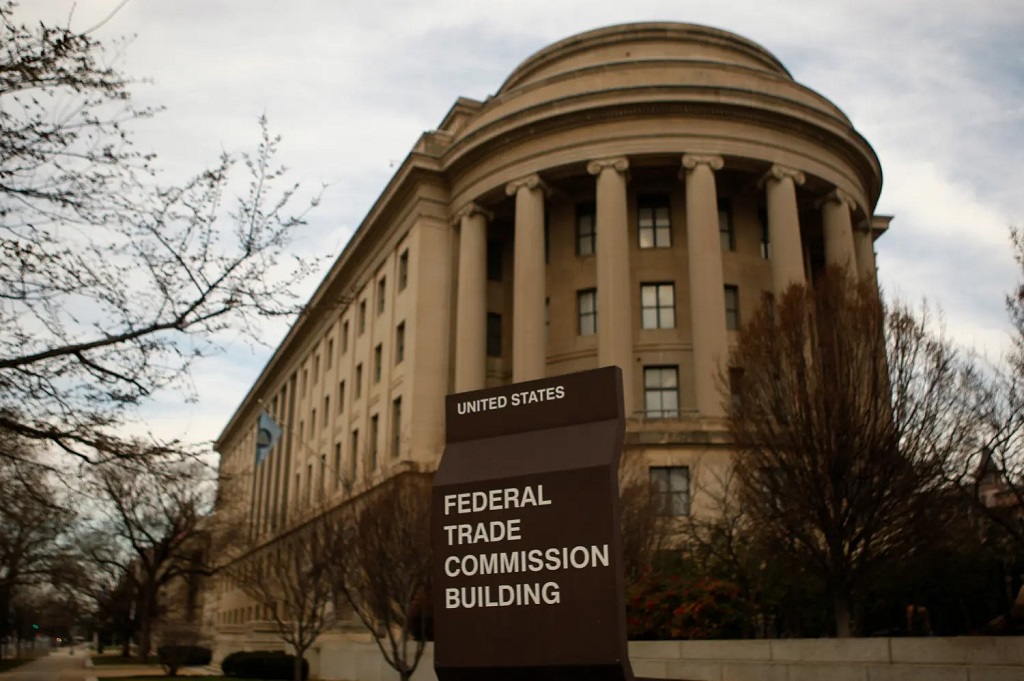
The Federal Trade Commission entered 2026, continuing a multi-year pivot away from disclosure-only remedies toward structural and monetary enforcement. After the Supreme Court’s AMG Capital decision limited the FTC’s ability to obtain equitable monetary relief under Section 13(b), the agency rebuilt its enforcement toolkit through rulemaking, administrative actions, and coordination with state attorneys general.
By 2026, the FTC is relying heavily on trade regulation rules to unlock civil penalties. The most consequential include the updated Negative Option Rule, which tightened consent, cancellation, and recordkeeping requirements for subscription services, and expanded interpretations of the Health Breach Notification Rule, now applied to certain health apps and connected devices.
These rules allow the FTC to pursue per-violation penalties rather than negotiated settlements alone. Civil penalties can exceed $50,000 per violation per day, which changes the economics of compliance for large platforms and recurring-revenue businesses.
What is distinct in 2026 is how the FTC frames consumer harm. Enforcement actions increasingly allege design-level unfairness, arguing that dark patterns, default settings, and friction-based cancellation systems are inherently deceptive even if individual disclosures exist. This approach lowers the evidentiary burden compared to proving individualized deception and aligns with how courts have begun to interpret “unfair methods of competition” and “unfair or deceptive acts or practices.”
| Area of Enforcement | Core Legal Theory | Practical Impact |
| Subscription billing | Unfair and deceptive negative options | Mandatory one-click cancellation and refund exposure |
| Data privacy | Unfair data practices and misrepresentation | Limits on retention, algorithmic use, and secondary monetization |
| AI claims | Deceptive performance and biased claims | Substantiation required for accuracy and safety claims |
| Health and wellness | Expanded breach notification duties | Incident reporting and consumer redress obligations |
CFPB in 2026: Aggressive Supervision and Fee-Based Enforcement
The Consumer Financial Protection Bureau continues in 2026 with an enforcement philosophy that treats fees, servicing practices, and data accuracy as consumer protection issues rather than contractual matters. Even amid ongoing legal challenges to its funding structure, the Bureau has maintained operational momentum through supervisory examinations and public enforcement actions.
A defining feature of CFPB activity entering 2026 is its focus on so-called “junk fees.” The Bureau has challenged overdraft charges, credit card late fees, and ancillary add-ons by arguing that their pricing is disconnected from actual cost or risk. Rulemakings finalized in 2024 and 2025 are now actively enforced, and supervised institutions face not only restitution orders but also mandatory changes to fee models.
Another 2026 development is the CFPB’s treatment of data accuracy as a consumer safety issue. Credit reporting disputes, payment processing errors, and automated underwriting models are examined for systemic bias and repeat error rates. Institutions are expected to show process-level controls, not just complaint resolution statistics.
The Bureau has signaled that high complaint volumes combined with slow correction cycles can independently trigger enforcement.
| Enforcement Theme | Typical Remedy | Consumer Outcome |
| Excessive fees | Restitution and fee caps | Lower recurring consumer costs |
| Servicing failures | Account corrections and monitoring | Faster error resolution |
| Credit reporting | Data audits and remediation | Improved credit accuracy |
| Digital payments | Platform-level compliance mandates | Reduced unauthorized transactions |
DOT Consumer Protection: Safety, Transparency, and Product Liability Overlap

The Department of Transportation plays a less obvious but increasingly important role in consumer protection. In 2026, DOT enforcement spans airline passenger rights, vehicle safety recalls, and transportation-related consumer disclosures. The Department’s actions often intersect with traditional product liability law, particularly where safety defects cause physical harm.
Air travel remains a central focus. DOT rules finalized in prior years now require automatic refunds for canceled or significantly delayed flights and clearer disclosure of ancillary fees. Enforcement in 2026 has moved beyond warnings toward fines for repeat noncompliance, with airlines required to demonstrate internal refund automation rather than ad-hoc customer service solutions.
On the vehicle side, the National Highway Traffic Safety Administration under DOT has increased scrutiny of defect reporting timelines and over-the-air software updates. Manufacturers are expected to report safety-critical failures promptly, even when defects emerge through software rather than mechanical components.
This is relevant not only to automobiles but also to consumer products used in transportation contexts, such as recreational vehicles and onboard appliances.
This regulatory posture aligns with broader consumer injury litigation trends. When agencies document safety failures or delayed disclosures, that record often becomes foundational evidence in civil cases.
This is especially visible in household and travel-related product incidents, including burn and explosion injuries linked to consumer appliances. Litigation involving a pressure cooker explosion illustrates how regulatory findings, recall histories, and disclosure failures converge into federal and state consumer protection claims rather than isolated tort actions.
| Domain | Enforcement Tool | Downstream Legal Effect |
| Air travel | Automatic refund mandates | Class actions and civil penalties |
| Vehicle safety | Defect reporting enforcement | Recall expansions and liability exposure |
| Transport products | Safety standards oversight | Evidence in injury litigation |
Inter-Agency Coordination and the 2026 Compliance Reality
A notable feature of 2026 consumer protection is coordination. The FTC, CFPB, and DOT increasingly share investigative findings and align timelines. A deceptive marketing claim can trigger FTC action, while related billing practices fall under CFPB jurisdiction,, and safety implications draw DOT scrutiny. For consumers, this means remedies are more comprehensive. For companies, it means siloed compliance strategies are no longer sufficient.
This coordination also affects remedies. Instead of one-time settlements, agencies now seek ongoing compliance reporting, independent audits, and structural changes. Monetary penalties are paired with behavioral requirements, which courts have largely upheld when grounded in clear statutory authority or finalized rules.
| Scenario | Agencies Involved | Resulting Consumer Protection |
| Misleading product claims | FTC + DOT | Advertising penalties plus safety mandates |
| Unfair financing terms | CFPB + FTC | Restitution and marketing restrictions |
| Transportation service failures | DOT + CFPB | Refunds plus billing practice reforms |
What 2026 Signals About the Direction of Consumer Protection
The practical meaning of the 2026 federal consumer protection is straightforward. Regulators are less interested in whether consumers technically agreed to terms and more focused on whether systems predictably cause harm. Enforcement actions emphasize repeatability, design choices, and internal incentives.
Data, billing, and safety are treated as interlinked consumer rights issues rather than separate regulatory silos.
From a consumer perspective, this approach improves access to refunds, corrections, and safer products. From a legal and compliance perspective, it raises the cost of neglecting consumer risk signals long before they become public scandals or mass injury cases.
The FTC, CFPB, and DOT are not expanding their missions rhetorically. They are doing so through concrete rules, penalties, and enforcement strategies that will continue shaping consumer protection beyond 2026.