

US MBA programs continue to set global standards for management education, offering powerful career outcomes, respected faculty, and access to influential professional networks.
In 2025, several American schools appear near the top of major international rankings, reaffirming the country’s status as a leader in graduate business training.
Costs commonly fall between 150,000 and 250,000 dollars, pushing applicants to focus on career placement, long-term salary potential, and overall ROI.
Strong employment pipelines into consulting, finance, and technology continue to reinforce demand for top US programs.
1. Harvard Business School (HBS)
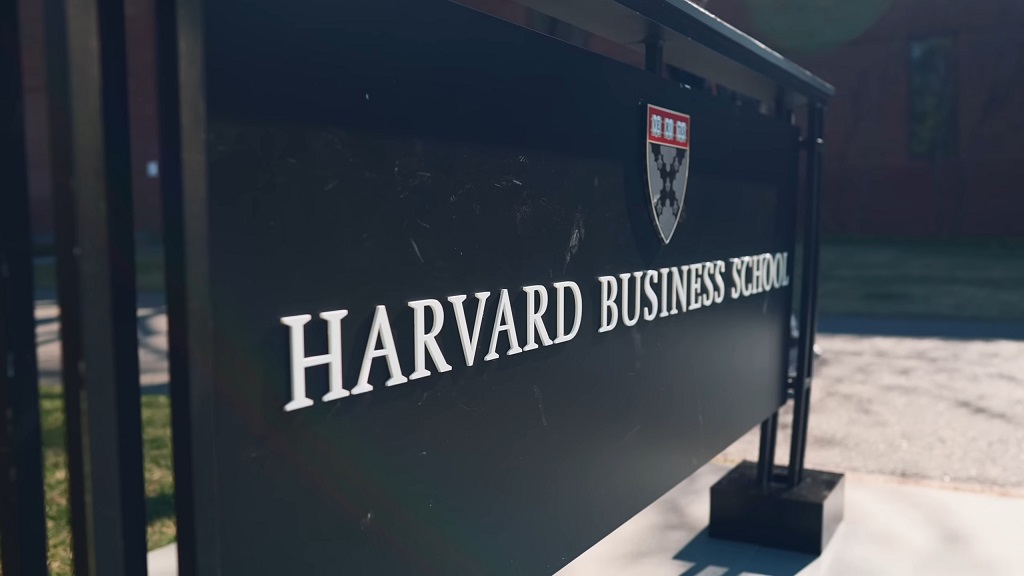
Many applicants continue to view HBS as a central force in global management training due to its scale, influential graduate base, and emphasis on leadership development.
A broad curriculum shaped by general management principles gives students exposure to decision-making across industries and organizational structures.
Strong ties to consulting, finance, entrepreneurship, and nonprofit leadership keep demand exceptionally high.
HBS also carries notable quantitative markers that reinforce its position. Median total pay reaches 221,800 dollars, while the Financial Times reports an average salary of 256,731 dollars.
Average GMAT scores sit at roughly 740, reflecting a highly competitive applicant pool. Students encounter case-method learning that drives analytical thinking and active participation across nearly every class session.
Additional elements of the HBS experience are:
- Exposure to an extensive alumni network that influences business, government, and nonprofit sectors.
- Access to research centers dedicated to entrepreneurship, social enterprise, and global business activity.
- Opportunities for project-based work in both domestic and international settings.
2. Stanford Graduate School of Business

Growing interest in entrepreneurial careers and technology-driven work has helped keep Stanford GSB at the forefront of MBA education.
A close relationship with Silicon Valley attracts candidates focused on innovation, early-stage ventures, product development, and venture capital.
Median total pay reaches 268,490 dollars, placing the school at the top of compensation data across US programs. Average GMAT scores reach 738.
A culture centered on personal development shapes much of the classroom experience.
Students engage in courses designed to improve interpersonal communication and self-awareness, including the long-running “Touchy Feely” course that has become an integral element of the curriculum.
Strong demand for Stanford often comes from individuals seeking access to a setting shaped by creativity and rapid experimentation.
3. Wharton School, University of Pennsylvania

Wharton offers a wide academic platform with a strong focus on finance, analytics, healthcare management, and real estate. FT reports a weighted salary of 241,522 dollars, and average GMAT scores reach 728.
Candidates seeking rigorous quantitative training often consider Wharton due to its analytical coursework, research-driven culture, and ties to major financial institutions.
Interest in Wharton also extends to globally minded students.
A joint MBA or MA through the Lauder Institute attracts candidates targeting cross-border careers in consulting, investment, or government-related work.
Employers continue to recognize Wharton graduates for their structured thinking and facility with data-driven decisions.
Strong placement outcomes across consulting, banking, and technology reinforce demand each year.
4. MIT Sloan School of Management
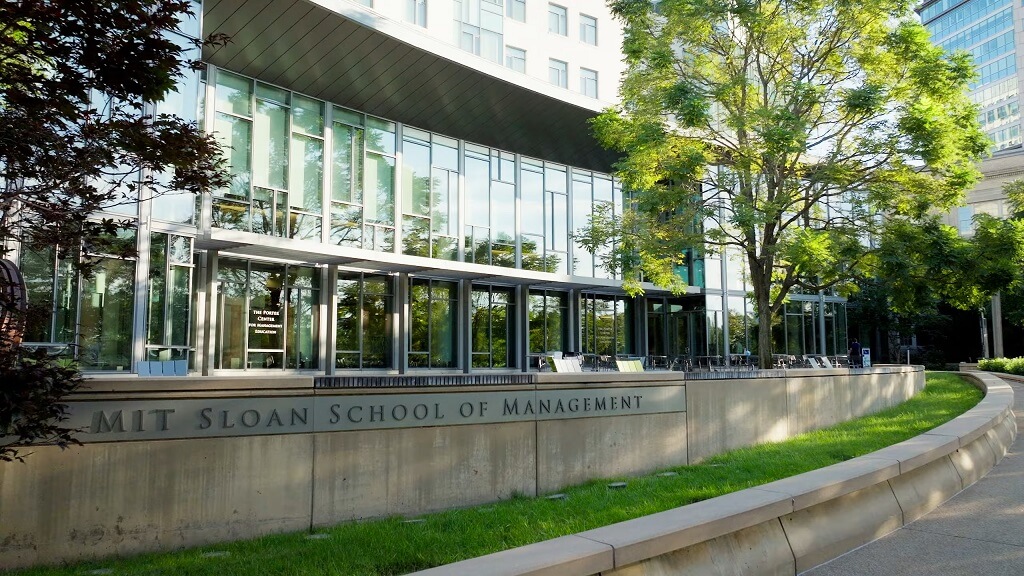
Interest in MIT Sloan often comes from candidates focused on analytics, sustainability, operations, and technology.
FT salary levels reach 232,565 dollars, supported by an average GMAT of 730.
A structured yet flexible curriculum encourages students to engage in quantitative methods, data-driven management, and innovation-focused coursework.
Action Learning Labs provide hands-on project work with partner organizations.
Students tackle operational issues, strategic questions, or technology-related challenges in real environments.
Many Sloan applicants value these experiences because they offer meaningful exposure to experimentation and problem-solving under real constraints.
Additional academic and professional angles frequently attract candidates:
- Access to engineering and computer science resources across the broader MIT community.
- Strong faculty research agendas in supply chain, sustainability, and digital transformation.
- Programs that encourage collaboration with startups and corporate innovation teams.
5. Columbia Business School
Columbia’s position in New York City plays an important role in shaping academic and professional opportunities.
Students interact with global companies across finance, media, consulting, and real estate.
FT salary figures reach 242,747 dollars, and average GMAT scores hold near 730.
Classroom instruction is supported by regular contact with industry practitioners who teach elective courses or participate in conferences and project engagements.
Many students choose Columbia due to immediate exposure to asset management firms, banks, private equity groups, consulting firms, and emerging media companies.
A closer look at program attributes shows us:
- Real-time interaction with executives who shape financial markets and industry trends.
- A curriculum that integrates theory with practical exercises focused on markets, strategy, and leadership.
- Strong recruiting pipelines into investment banking, consulting, and media-management roles.
6. Chicago Booth School of Business

Booth offers a distinctive model built around academic flexibility and analytic rigor.
Students may select courses across finance, economics, behavioral science, and strategy without a rigid core structure.
FT data lists salary levels of 236,474 dollars, with an average GMAT of 728. Many applicants value the opportunity to design highly personalized study plans.
Faculty influence also contributes to Booth’s appeal.
Research in economics and behavioral science has shaped modern business theory, and students gain exposure to frameworks that are widely used in strategic and financial decision-making.
Employers seeking analytically strong graduates place significant emphasis on Booth during annual recruiting cycles.
7. Northwestern Kellogg School of Management
Kellogg attracts candidates focused on:
- Marketing
- Leadership development
- Healthcare
FT reports salary outcomes of 219,487 dollars, paired with an average GMAT of 731.
Instruction often emphasizes teamwork, communication, and organizational leadership, creating a collaborative environment across programs.
Interest in Kellogg also comes from students drawn to cross-disciplinary training.
The MMM dual degree combines an MBA with a Master of Science in Design Innovation and gives participants structured exposure to:
- Design methods
- Product strategy
- Customer research
Advantages frequently include:
- Strong recruiting relationships within marketing, consulting, and healthcare.
- Instruction shaped by faculty research on consumer behavior and organizational behavior.
- A culture that values team-based projects and leadership practice in real scenarios.
Rankings Breakdown
Growing interest in MBA rankings has encouraged applicants to look beyond headline numbers and evaluate institutions through multiple perspectives.
Many candidates now rely on specialized admissions advisory firms that analyze school culture, job outcomes, and fit.
For those planning long-term leadership or board careers, resources like the Career Hub can offer complementary guidance on how to navigate portfolio roles beyond traditional MBA career paths.
Two of the most widely consulted sources are Fortuna Admissions and Menlo Coaching, each offering detailed guidance shaped by extensive industry experience.
Fortuna Admissions
Many applicants approach Fortuna Admissions for nuanced insight into program character, recruitment patterns, and applicant positioning.
Advisers aim to connect candidate backgrounds with programs that reflect appropriate industry strengths or learning styles.
GMAT coaching, application planning, and ROI evaluation form a significant portion of their support structure.
Many candidates use Fortuna’s frameworks to strengthen self-awareness around goals and enhance presentation quality in competitive pools.
Menlo Coaching
Applicants seeking highly data-driven admissions insight often rely on Menlo Coaching.
Employment data, industry-placement trends, and acceptance-rate statistics form a major part of their evaluation process.
Coaching emphasizes investigation of job outcomes and sector representation, encouraging candidates to focus on the programs that support realistic and ambitious career targets.
Reported acceptance rates include Booth at 30 percent, Cornell at 31 percent, Stern at 27 percent, and UCLA at 38 percent.
Sector-placement analysis frequently shapes candidate preferences. UW Foster, for example, places 44 percent of its graduates into technology positions, signaling strong links to Seattle-based employers and major tech companies.
Costs and ROI
Growing interest in US MBA programs has increased attention on financial planning, cost transparency, and post-graduation outcomes.
Applicants frequently compare tuition levels, living expenses, and salary projections to ensure that long-term benefits justify the substantial investment.
Cost varies widely across cities, and ROI depends heavily on industry placement and compensation growth.
Tuition and Living Costs
MBA program expenses often fall between 150,000 and 250,000 dollars, reflecting tuition, housing, materials, and additional program-related fees.
HBS frequently cites all-in totals near 225,000 dollars for its two-year MBA.
Regional price differences also influence applicant planning, as cities such as Boston, New York City, San Francisco, and Chicago present different housing and transportation considerations.
Applicants often organize financial planning around categories shown below:
- Tuition and academic fees.
- Housing, utilities, and personal expenses.
- Transportation, insurance, and required materials.
- Optional study trips, global immersion programs, or leadership programs with additional costs.
Salary and ROI
Graduates of leading US MBA programs continue to benefit from strong compensation outcomes, driven by employer demand in consulting, technology, and finance.
Reported compensation includes 256,000 dollars for Harvard, 241,000 dollars for Wharton, 268,000 dollars for Stanford, and 232,000 dollars for MIT Sloan.
Many graduates recover costs within three to four years, with certain industries offering even shorter payback horizons due to high bonus structures and rapid promotion cycles.
Applicants assessing ROI often examine several decision-making factors:
- Starting compensation in target industries and geographic markets.
- Bonus potential and projected earnings during the first five to ten years of employment.
- Access to leadership pathways, rotational programs, and advancement opportunities.
Summary
Top US MBA programs deliver exceptional professional advancement, influential networks, and strong post-graduate compensation.
Rankings offer helpful reference points, yet long-term career objectives, program strengths, instructional style, and community fit provide better decision-making criteria.
Strong ROI, extensive leadership preparation, and robust employer relationships continue to make M7 programs and their peers highly sought after by ambitious candidates.