
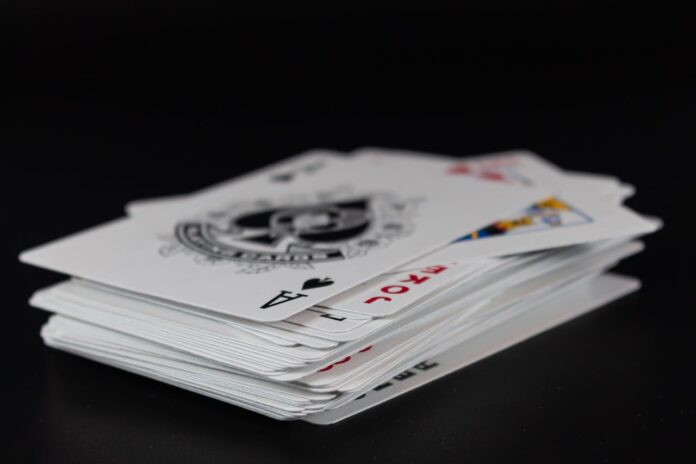
Tongits looks simple from across the table: draw, discard, form groups, hope for low points. After a few hands, though, a new player quickly learns why Filipinos have kept playing it for decades.
Every discard can give away information. Every hidden meld can become a surprise. A quiet player may be close to winning before anyone notices.
Tongits is a 3-player rummy-style card game commonly linked with the Philippines. Standard rules use 1 regular 52-card deck, no jokers, with each player trying to form valid melds while reducing unmatched card points in hand.
Tong-Its can be seen as a 3-player knock rummy game, using 13 cards for the dealer and 12 cards for each other player.
What You Need To Play Tongits

Tongits needs:
| Item | Requirement |
| Players | 3 |
| Deck | 1 standard 52-card deck |
| Jokers | Usually removed |
| Goal | Empty your hand or have the lowest unmatched card total |
| Play direction | Commonly counterclockwise |
| Main actions | Draw, meld, sapaw, discard, call draw, win by Tongits |
The dealer receives 13 cards. The other 2 players receive 12 each. The remaining cards sit face down as the stock pile. The dealer begins by discarding 1 card, then play continues around the table.
Before playing for stakes, agree on house rules. Tongits has regional variations, especially around payment, challenges, “burned” hands, and special bonuses.
The same principle applies online: before considering platform offers like GameZone rebate, read the terms carefully and know exactly how the game, rewards, and limits work.
Card Values In Tongits

Card values matter when nobody wins by emptying the hand. At the end of a draw or when the stock pile runs out, unmatched cards are counted.
| Card | Point Value |
| Ace | 1 |
| 2 to 10 | Face value |
| Jack | 10 |
| Queen | 10 |
| King | 10 |
A hand with King, 9, 4, and Ace as unmatched cards has 24 points. A hand with 7 and 2 left has 9 points. Lower is better.
Melded cards normally do not count against you. The danger comes from “deadwood,” meaning loose cards that are not part of a valid combination.
Valid Melds: Sets And Runs
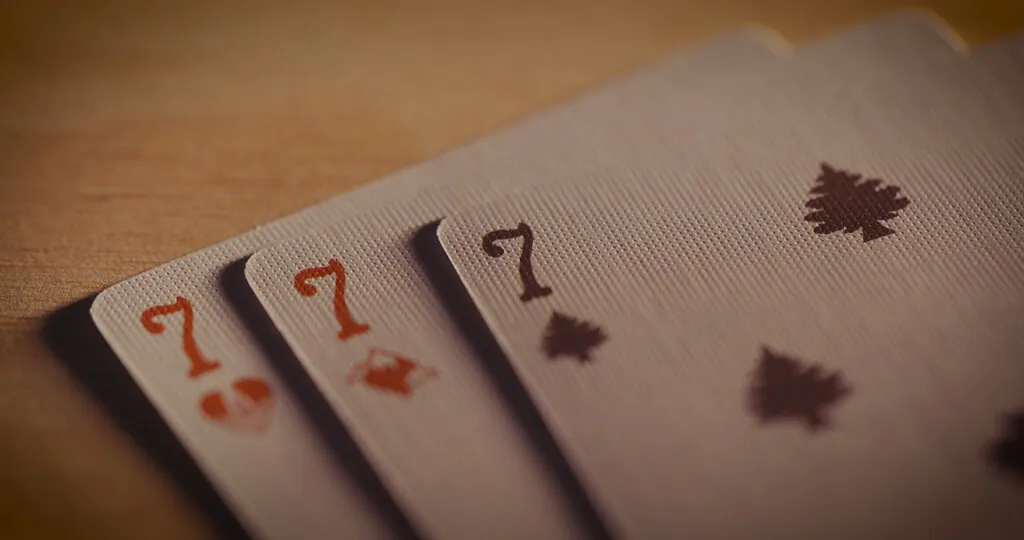
A meld is a valid card combination. Tongits has 2 main types.
Sets
A set uses 3 or 4 cards of the same rank.
Examples:
- 7♣, 7♦, 7♥
- Queen♠, Queen♥, Queen♦, Queen♣
Runs
A run uses 3 or more consecutive cards of the same suit.
Examples:
- 4♠, 5♠, 6♠
- 8♦, 9♦, 10♦, Jack♦
Aces are low in common Tongits rules. Ace, 2, 3 of hearts can work. Queen, King, Ace does not work under standard rules listed by Pagat and Denexa.
How A Turn Works
A normal turn has a steady rhythm.
First, draw 1 card. You may take from the stock pile, or you may take the top discard if it helps form a valid meld, depending on the rule set being used.
Next, decide whether to lay down a meld. You can expose a set or run on the table. Some players keep strong melds hidden to avoid giving opponents easy sapaw chances.
Then, add cards to exposed melds when allowed. That move is called sapaw. For example, if an opponent has 5♣, 6♣, 7♣ on the table, you may be able to add 4♣ or 8♣. If someone has 9♠, 9♥, 9♦ exposed, the 9♣ may fit.
Finally, discard 1 card. Your discard ends your turn.
A good discard should reduce your hand value without feeding another player. Throwing a 6 beside an exposed 4, 5, 7 run can be dangerous.
Ways To Win A Hand
Tongits usually ends in 1 of 3 ways.
Win By Tongits
A player wins by Tongits after getting rid of all cards through melds, sapaw, and discard. Emptying the hand is the cleanest finish because opponents do not get to win by lower points.
Example: You have 3♠, 4♠, 5♠ and 10♦, 10♣, 10♥ already exposed. On your turn, you add 6♠ to your run, sapaw a Queen onto another player’s Queen set, then discard your last loose card. That can end the hand.
Call A Draw
A player with a low hand may call draw, often called “draw” or challenged through “resbak” in some local play. Academic work on card and money games in Mindanao notes that Tongits can be interrupted by a draw call and a later challenge, ending the game immediately.
A draw call is a confidence move. If opponents fold, the caller wins. If someone challenges, hands are compared. Lowest unmatched card total wins. Some rule sets give tie advantages to the challenger, so agree before dealing.
Stock Pile Runs Out
If the stock pile runs out, players count unmatched cards. The lowest total wins, although burned-hand rules may disqualify a player who never exposed a meld.
What “Burned” Means
A burned player usually means someone who failed to expose any meld before a draw, a Tongits win, or stock exhaustion. Many tables treat burned players as unable to challenge a draw or win through point count.
For beginners, avoiding burn matters. Expose at least 1 safe meld once your hand has a clear structure. Holding every combination hidden can protect you, but it can also trap you if another player ends the hand early.
Basic Winning Tips For Beginners
Tongits has luck, but strong players consistently make better small decisions.
Count Visible Cards
Pay attention to exposed melds, discards, and sapaw cards. If 3 queens are already visible, holding the last queen as a hopeful pair has limited value.
Keep Flexible Cards Early
Middle cards often connect more easily than isolated high cards. A 6 can become part of 4-5-6, 5-6-7, or 6-7-8. A lone king has fewer paths.
Lower Deadwood Before Chasing Big Melds
New players often hold face cards too long because a set feels possible. A King and Jack with no nearby support can punish you if someone calls draw.
Watch The Player Who Stops Taking Discards
When a player repeatedly draws from the stock and discards calmly, they may already have a low hand. That is often a warning sign. Avoid feeding easy sapaw.
Use Sapaw To Reduce Risk
Sapaw can cut points fast. Adding a 10 to someone else’s exposed set removes 10 points from your hand. That move may matter more than waiting for a perfect private meld.
Do Not Call Draw Too Early
A draw call with 6 or 7 points may look safe, but an opponent with hidden melds may have fewer. Call when visible play supports your read, not only because your hand feels light.
Common Mistakes New Players Make
Beginners usually lose points through habits that experienced players notice quickly.
- Discarding cards that complete obvious runs
- Holding too many face cards late in the hand
- Refusing to expose any meld
- Calling draw without tracking opponents
- Forgetting that sapaw can empty a hand quickly
- Treating every pair as worth saving
A simple example: You hold King♣, King♦, 3♥, 4♥, and 8♠. Keeping both kings may feel tempting, but if the hand is moving fast, 20 loose points is a serious risk. Dropping one king earlier may save the round.
A Note On Gambling And Local Rules
@04spongebob0
Tongits is often played socially, but money games can create legal problems depending on location.
In 2024, the Philippine News Agency reported that Caraga police arrested hundreds in an illegal gambling drive, with illegal card games including tong-its listed among the activities.
Casual home play, app play, and money play are not the same. Check local law before adding stakes.
Why Tongits Has Stayed Popular
Tongits lasts because it gives players constant decisions. Denexa describes it as a rummy game with bluffing because melds can remain hidden, allowing players to misread one another’s hand strength.
Digital versions have also helped the game reach players outside family tables and neighborhood gatherings. GMA News reported that Tongits Wars grew from Facebook roots into mobile play, later passing 500,000 downloads by late 2016.
Summary
Tongits is easy to start, but careful play matters. Learn the card values, build sets and runs, expose a meld before burn becomes a risk, and track every discard. The best players are rarely the loudest at the table. They lower points early, feed opponents carefully, and know when a draw call is worth the risk.