

Yes, a growing number of schools in 2025 now formally require students to show proof of how they wrote their work, not just the finished assignment. This includes rough drafts, handwritten notes, revision history, and in-class writing checkpoints.
The goal is simple and urgent: protect real learning in an era where fully generated essays can be produced in seconds.
This shift did not happen quietly. It came after two years of widespread concern among teachers, administrators, and universities that traditional take-home essays no longer reliably reflect a student’s actual ability.
The change is not about banning technology. It is about restoring visibility into the thinking process behind student work.
Why Schools Changed Policy So Rapidly
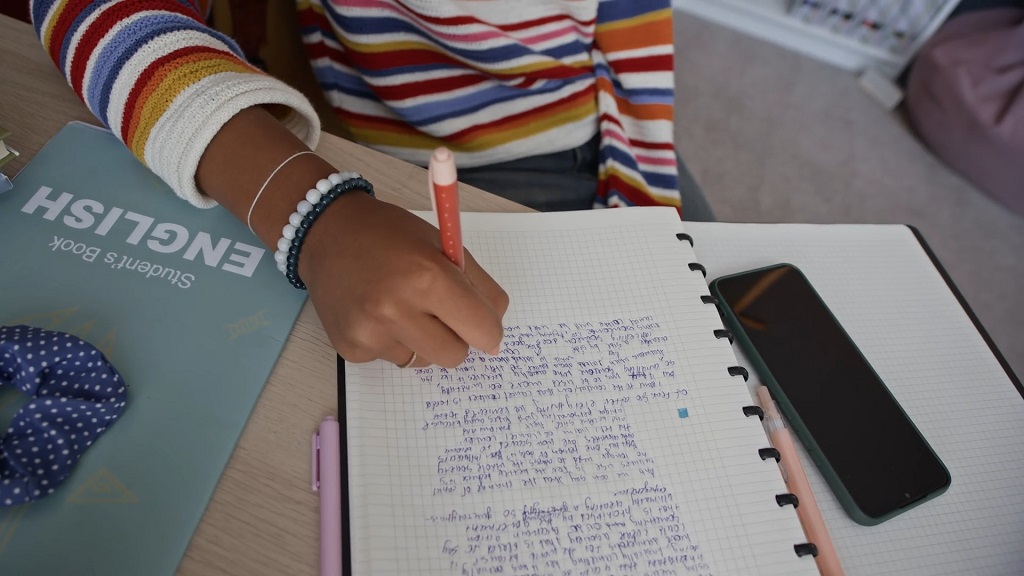
Until recently, plagiarism was the main academic integrity threat. Teachers looked for copied paragraphs from websites or recycled papers from older students. That model collapsed almost overnight once generative writing tools entered classrooms. Students could suddenly submit original-seeming essays without copying a single sentence from any existing source.
By late 2024, many districts realized they could no longer reliably determine whether:
- A student understood their own argument
- A student could write independently
- A grade reflected learning or automation
Writing assignments became verification problems instead of learning tools.
Instead of chasing detection alone, schools shifted strategy. They stopped asking only “Is this paper authentic?” and started asking “Can the student show how they built it?”
That question reshaped grading policies across hundreds of districts.
What “Proof Of Process” Actually Means In Practice

Proof of process is not a single requirement. It is a structured timeline that shows how an idea evolved from start to finish. In most schools using this system in 2025, it includes three core components: early planning, mid-stage development, and live writing checkpoints.
Students are now expected to submit:
- Topic outlines
- Raw brainstorming pages
- Rough early drafts
- Teacher feedback revisions
- Final versions
In higher grades, this material may account for 30 to 50 percent of the total assignment grade, not as busywork, but as evidence of real cognitive effort.
The Three Most Common Process Checkpoints
Different schools apply different versions of this system, but the core structure is remarkably consistent nationwide.
| Process Stage | What Students Submit | What Teachers Evaluate |
| Planning Phase | Handwritten notes, mind maps, outlines | Original thinking, topic understanding |
| Draft Phase | First full draft with weak structure | Argument logic, early voice |
| Final Phase | Polished essay | Writing quality, clarity, coherence |
These checkpoints ensure that learning happens in stages instead of all at once, the night before the deadline.
Why In-Class Writing Has Returned In Force

One of the biggest structural changes inside schools is the return of supervised in-class writing sessions. Many middle schools, high schools, and universities now require that at least part of major written assignments be completed live during class time.
This serves three purposes at once:
- It verifies authentic writing ability
- It reduces anxiety for students who struggle at home
- It gives teachers real-time insight into student skill gaps
These sessions are not full essays. They often involve:
- Writing introductions from scratch
- Building thesis statements
- Revising a paragraph live
- Responding to a prompt without preparation
The goal is not speed. The goal is visibility.
Where Technology Still Fits Into This System
Contrary to popular belief, most schools have not banned digital writing assistance outright. Instead, they now regulate how and when those tools can be used.
Some districts explicitly allow:
- Grammar suggestions
- Sentence clarity improvement
- Vocabulary substitution
What they restrict is:
- Full paragraph generation
- Thesis creation
- Argument structuring
This is exactly where the AI content detector enters the classroom picture. Many schools now use it not as a punishment tool, but as a verification layer that works alongside drafts and in-class writing samples.
When a final paper does not match the documented writing trail or the student’s demonstrated in-class ability, it triggers review rather than automatic penalties. This dual-layer system of process proof plus detection has proven far more reliable than software alone.
What This Looks Like For Students Day To Day
For students, this policy change feels less dramatic than media headlines suggest. The biggest difference is not increased workload, but increased spacing of work across time.
Instead of:
- Doing everything in one night
students now: - Spread writing over multiple smaller sessions
This actually reduces panic-driven deadlines while increasing consistency. Students who genuinely struggle with writing benefit from earlier feedback. High-performing students lose the option of rushing everything at the last minute.
How Grading Has Changed Under Process-Based Writing
Grading has shifted from outcome-only evaluation to effort plus execution evaluation.
| Component | Typical Grade Weight In 2025 |
| Planning and Notes | 15 to 20 percent |
| Draft Quality and Revisions | 20 to 30 percent |
| Final Paper | 50 to 60 percent |
This protects students who work steadily but struggle with polish, while still rewarding strong final performance.
What Teachers Are Actually Saying About The Change

Teachers report three consistent benefits since adopting process-based verification.
First, student voice has become more visible again. Even weaker writers now show unique phrasing patterns across drafts that artificial tools cannot easily replicate.
Second, grading has become more defensible. When students dispute a grade, teachers can reference the entire development trail rather than a single document.
Third, classroom behavior has improved. Students engage earlier because they know waiting until the end removes control from the process.
What Parents Need To Understand About This Shift
Many parents initially worry that this system increases pressure. In practice, it does the opposite. The pressure moves from one massive due date to multiple smaller creative checkpoints.
This means fewer all-night writing sessions. It means fewer emotional breakdowns before deadlines. It means writing becomes something students build rather than something they survive.
Parents may notice that:
- Their child talks more about ideas than about grades
- Homework becomes shorter but more frequent
- Feedback becomes more specific instead of generic
These are not signs of academic overload. They are signs of restored instructional structure.
Will This System Stay? Is It A Temporary Reaction?
All signs point to permanence. Universities are already aligning application writing and placement exams with a similar process-based verification. Employers increasingly request real-time writing samples during interviews. The ability to demonstrate how you think is becoming more valuable than the ability to produce polished text alone.
The 2025 shift is not a short-term panic response. It is a structural correction to an education system that lost visibility into learning.
Final Reality Check
Schools did not introduce process-proof writing to punish students or suppress technology. They did it to preserve what education is supposed to measure: thinking in progress, not just formatting at the finish line.
Drafts, notes, and live writing are not obstacles. They are now the main signal of genuine learning.
This is not a trend. It is the new foundation of writing education in 2025 and beyond.