
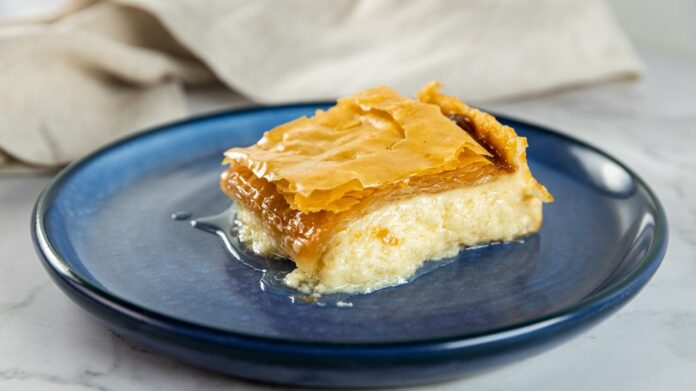
You’ve had baklava. Maybe you’ve tried kataifi. But there’s another Greek dessert that rarely makes the same headlines, and it’s time that changed. Enter Galaktoboureko—a dessert that doesn’t just belong on your plate, it deserves the spotlight.
This dish shows up in Greek kitchens during celebrations, Sunday lunches, and any moment that calls for something rich and satisfying.
It’s rich, textured, and has that citrusy kick that keeps you coming back—and honestly, it’s surprising it hasn’t gone mainstream like some of its more famous Mediterranean relatives.
Serve it warm for a contrast of textures, or chilled if you prefer it set and mellow. Pair it with strong Greek coffee or a scoop of vanilla ice cream. Either way, Galaktoboureko hits hard—in the best way.
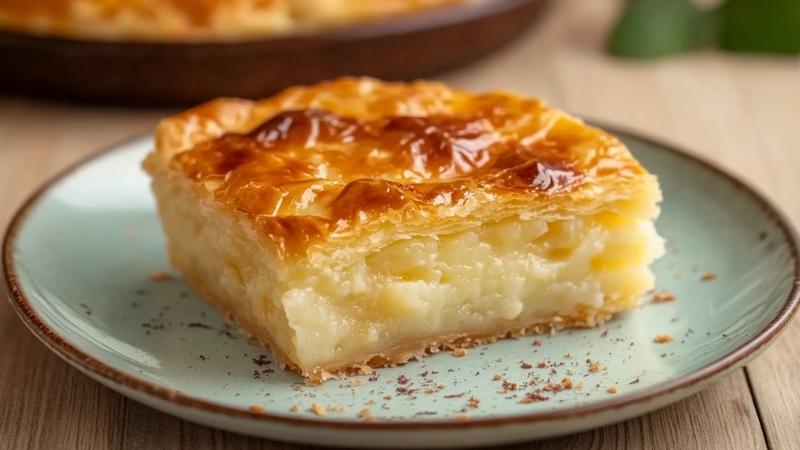
Galaktoboureko – Classic Greek Custard Pie in Syrup
Equipment
- Large saucepan
- Whisk
- 9x13 inch baking dish (glass or metal)
- Pastry brush
- Sharp knife
- Medium pot (for syrup)
- Mixing Bowl
- Fine grater or zester (for lemon)
- Measuring Cups and Spoons
Ingredients
For the custard:
- 1 liter 4 cups whole milk
- 120 g ½ cup fine semolina
- 150 g ¾ cup granulated sugar
- 3 large eggs
- 2 tsp vanilla extract
- 50 g ¼ cup unsalted butter
- Zest of 1 lemon
For the phyllo layers:
- 400 g 14 oz phyllo dough, thawed
- 150 g ⅔ cup unsalted butter, melted
For the syrup:
- 250 g 1¼ cup granulated sugar
- 200 ml ¾ cup + 1 tbsp water
- Juice of ½ lemon
- 1 strip of lemon peel
- 1 cinnamon stick optional
Instructions
- Prep your tools and ingredients:Thaw your phyllo dough if frozen (follow package instructions). Grease a 9x13-inch baking dish with a bit of butter.
- Make the syrup (first):In a saucepan, combine sugar, water, lemon juice, lemon peel, and cinnamon stick. Bring to a boil, then reduce heat and simmer for 6–8 minutes until slightly thickened. Remove from heat and let it cool fully. Discard lemon peel and cinnamon stick.

- Prepare the custard:In a large saucepan, heat the milk over medium until it's almost simmering. Reduce the heat, then whisk in semolina gradually to prevent lumps. Stir constantly until it thickens, about 5–7 minutes.
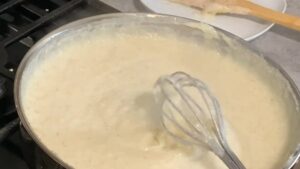
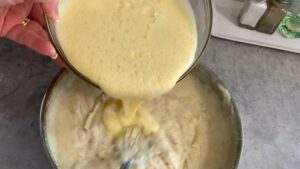
- Finish the custard:Remove from heat. Stir in sugar, butter, vanilla, and lemon zest. In a separate bowl, lightly beat the eggs. Slowly add eggs to the warm (not hot) custard, whisking constantly to create a smooth, creamy texture.
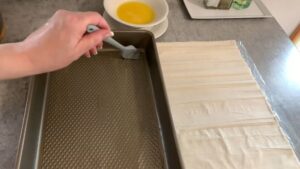
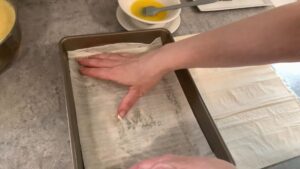
- Assemble the base:Place 7–8 phyllo sheets in the baking dish, brushing each with melted butter. Let the edges hang over the sides for folding later.
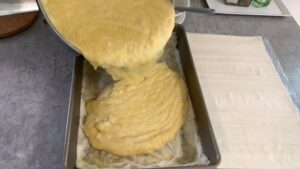
- Add the custard:Evenly spread the warm custard over the phyllo base.
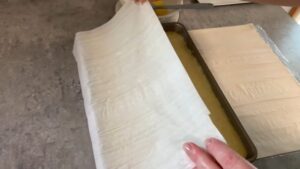
- Top it off:Fold in the overhanging phyllo sheets over the custard. Add 5–6 more phyllo sheets on top, buttering each layer well. Tuck or trim the edges neatly.
- Score before baking:Gently score the top layer into squares or diamonds using a sharp knife. Don’t cut all the way through.
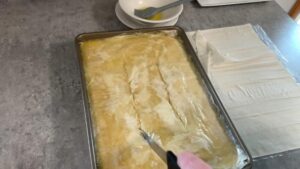
- Bake:Bake at 170°C (340°F) for 50–60 minutes, or until the top is golden and crisp.
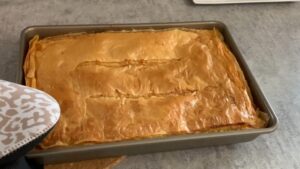
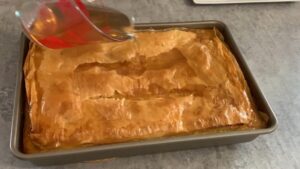
- Syrup it while hot:Immediately after baking, slowly pour the cooled syrup over the hot pie. Let it absorb gradually.
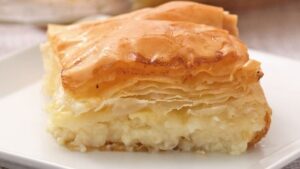
- Cool and serve:Allow the galaktoboureko to rest for 1–2 hours before slicing. This helps the custard set and the syrup distribute evenly.
Video
Notes
- Use fine semolina to ensure a smooth, creamy custard.
- Always pour cool syrup over hot pastry (or hot syrup over cooled pastry) to maintain a crispy texture.
- Don’t forget to score the top—this prevents the phyllo from puffing too much and makes slicing easier.
- Keep phyllo covered with a damp towel while working to prevent drying out.
- This dessert can be made ahead and kept in the fridge—it’s even better the next day!
How to Tell When the Custard Is Cooked Right
You’re aiming for thick, smooth, and stable—not runny, and definitely not grainy or overcooked. Here’s how to know it’s ready:
- The mixture should coat the back of a spoon and leave a clean line when you run your finger through it.
- When stirring, it should feel noticeably heavier, like a loose pudding.
- It should still be pourable but hold shape—think soft mounds, not soup.
Once it reaches that point, remove it from the heat immediately. Don’t wait for it to fully set on the stove; it’ll continue thickening as it cools.
How Much Syrup Is Enough?
Too little and it’s dry. Too much and it’s a soggy mess. Here’s the target:
- You need roughly 1 to 1¼ cups (250–300 ml) of syrup for a 9×13 tray.
- Pour it slowly and evenly over the entire surface while the Galaktoboureko is still hot from the oven and the syrup is cool.
- The syrup should be absorbed gradually, not flood the dish. If there’s still a pool after 10 minutes, you used too much.
Should It Be Served Hot or Cold?
Both work—but the experience is totally different:
- Hot (or warm): Phyllo is extra crispy, custard is soft and creamy. Great for same-day serving.
- Cold (after chilling): Firmer custard, denser texture, and a more balanced syrup feel. Ideal for slicing clean, and it holds better for presentation.
Final Thoughts
Galaktoboureko takes some time, but the result is solid: crisp top, smooth filling, sharp syrup. Get the texture right, don’t overdo the syrup, and keep the process tight.
Simple ingredients, big payoff. That’s all it needs.