

Final exams in math rarely reward memorization alone. Students usually do better when they can move between formulas, diagrams, graphs, and word problems without getting stuck halfway through.
Across major U.S. standards and assessment frameworks, the same pattern keeps showing up: algebra and geometry are treated as core high school content, and success depends on both procedural fluency and the ability to explain why a method works.
For that reason, exam prep should center on a short list of topics that appear again and again in classwork, state standards, and college-readiness frameworks. Below are 12 of the biggest ones.
A Quick Look at What Usually Matters Most
| Area | What Students Are Usually Asked To Do | Why It Shows Up So Often |
| Linear algebra | Solve equations, graph lines, interpret slope | Forms the backbone of introductory algebra and modeling |
| Functions | Read graphs, compare representations, identify behavior | Connects algebra to graphs and real-world contexts |
| Quadratics | Factor, solve, graph, find vertex and zeros | Common in Algebra I and II final exams |
| Geometry basics | Work with angles, triangles, congruence, similarity | Supports proofs, measurement, and later trigonometry |
| Coordinate geometry | Use equations to analyze geometric figures | Bridges algebra and geometry |
| Measurement and volume | Apply formulas in multi-step problems | Frequently appears in mixed-review sections |
| Trigonometry basics | Use sine, cosine, tangent in right triangles | Often one of the last major units before finals |
For students who want to review several of those areas in one place, Qui Si Risolve can fit naturally into a broader final-exam study routine.
1. Solving Linear Equations and Inequalities
![Handwritten steps solve the inequality −3x ≥ −9 to get x ≤ 3, shown on a number line as (−∞, 3]](https://www.hurfpostbrasil.com/wp-content/uploads/2026/03/Solving-Linear-Equations-and-Inequalities-1024x576.jpg)
Linear equations look simple until a final exam mixes fractions, variables on both sides, and a word-problem context. A student may solve 3x + 5 = 20 quickly, then freeze on 4(2x – 1) = 3x + 9 or 2/3x – 4 = 8.
Strong review here should include:
College Board lists linear equations in one and two variables, linear functions, systems, and linear inequalities as core algebra content on the SAT. Common Core also places major weight on reasoning with equations and inequalities.
A useful habit for students is checking each answer by substitution. One small arithmetic mistake can wreck an otherwise correct method.
Example
Solve: 5(x – 2) + 3 = 2x + 12
- Distribute: 5x – 10 + 3 = 2x + 12
- Combine like terms: 5x – 7 = 2x + 12
- Move variable terms: 3x – 7 = 12
- Add 7: 3x = 19
- Divide: x = 19/3
In the final, teachers often care as much about the algebraic steps as the final answer.
2. Systems of Equations
Systems test whether students can handle more than one relationship at a time. Many finals include at least one system solved by graphing, substitution, or elimination.
Students should know how to identify whether a system has:
A classic exam trap is not recognizing parallel lines or equivalent equations.
College Board includes systems of two linear equations as a core readiness skill, and the Common Core embeds system solving inside its algebra standards.
Example
Solve by elimination:
2x + y = 11
3x – y = 4
Add the equations:
5x = 15
So x = 3
Substitute back:
2(3) + y = 11
6 + y = 11
y = 5
Students often lose points here by solving for one variable and forgetting to finish the pair.
3. Functions and Function Notation
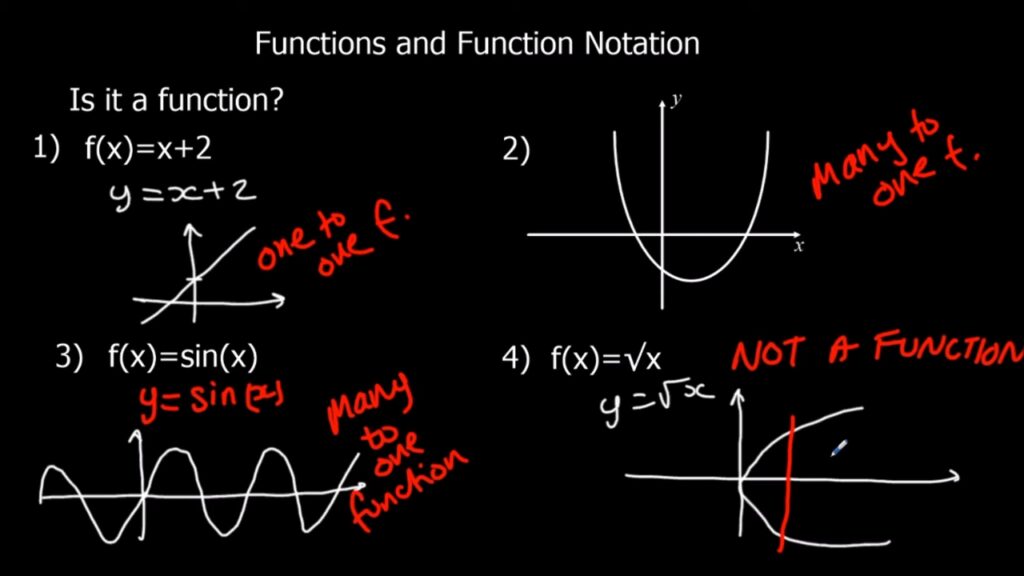
Once students reach finals, many math courses expect more than equation solving. They expect students to treat a function as a relationship that takes an input and gives exactly one output.
Common Core’s high school functions standards include function notation, interpreting functions in context, analyzing graphs, and comparing representations.
Key review points include:
Example
If f(x) = 2x² – 3x + 1, then:
f(2) = 2(4) – 3(2) + 1 = 8 – 6 + 1 = 3
That may look easy, but final exams often hide the same skill inside a word problem, graph, or table. A student might need to explain what f(5) means in a pricing or motion scenario, not merely compute it.
4. Graphing and Interpreting Linear Functions
View this post on Instagram
Slope, intercepts, rate of change, and graph interpretation sit near the center of algebra.
Students should be able to move between:
Common Core’s function standards stress interpreting key graph features in context, and College Board treats linear functions as foundational algebra content.
Students should review:
- slope from two points
- slope-intercept form: y = mx + b
- standard form
- point-slope form
- parallel and perpendicular lines
Example
Find the slope between (2, 5) and (6, 13):
slope = (13 – 5) / (6 – 2) = 8 / 4 = 2
A final may then ask for the equation of the line through one of the points:
y – 5 = 2(x – 2)
Then simplify if needed.
5. Factoring and Equivalent Expressions
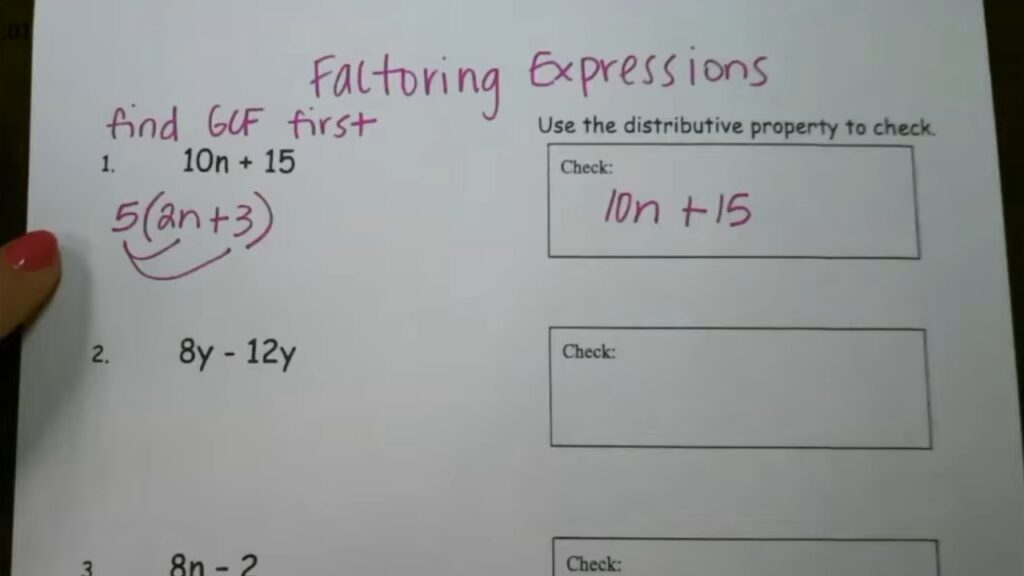
Students who cannot factor confidently often struggle through entire sections of an exam.
Common Core’s algebra overview starts with seeing structure in expressions, which includes interpreting and rewriting expressions in useful forms.
College Board also lists equivalent expressions under advanced math.
Core factoring patterns include:
Example
Factor: x² + 7x + 12
Look for two numbers that multiply to 12 and add to 7:
(x + 3)(x + 4)
Students should also know when an expression does not factor nicely over the integers.
Guessing wastes time forever.
6. Quadratic Equations and Parabolas
@mathandcobb Everything you always wanted to know about Quadratic Equations/Parabolas #math #mathtok #algebra #parabola #quadratic #precalcus #stem ♬ original sound – Álvaro Lozano-Robledo
Quadratics usually get a major place on finals because they combine equation solving, graphing, factoring, and interpretation.
Common Core’s function standards highlight linear, quadratic, and exponential models, while the College Board includes nonlinear equations and nonlinear functions under advanced math.
Students should review how to solve quadratics by:
They should also know how to identify:
- vertex
- axis of symmetry
- zeros or x-intercepts
- maximum or minimum value
Example
Solve: x² – 5x + 6 = 0
Factor:
(x – 2)(x – 3) = 0
So the solutions are x = 2 and x = 3
A good final-exam question may follow up by asking which point is the vertex, or whether the parabola opens up or down.
7. Exponents, Radicals, and Growth Patterns
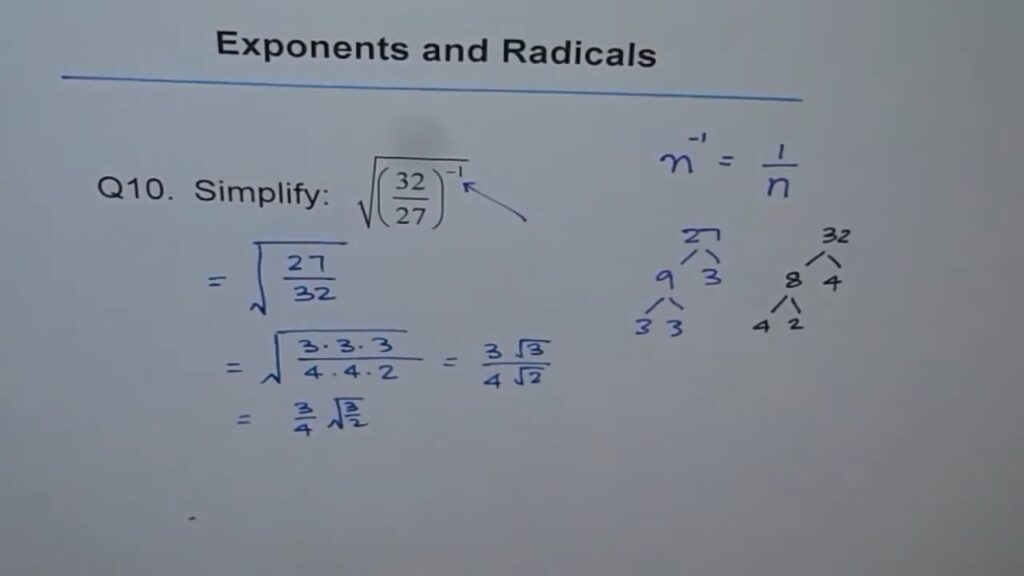
Many students focus so hard on lines and quadratics that they neglect exponent rules. That is risky.
Common Core’s functions standards include comparing linear and exponential models, while the College Board identifies nonlinear algebra, including exponential expressions, as a bridge toward later math.
Students should know:
Example
Simplify:
(3x²)(2x⁵) = 6x⁷
Another common one:
x^-3 = 1/x³
Teachers often include at least one question that checks whether students know the rule and can apply it without turning every step into a guess.
8. Angle Relationships and Basic Geometric Reasoning
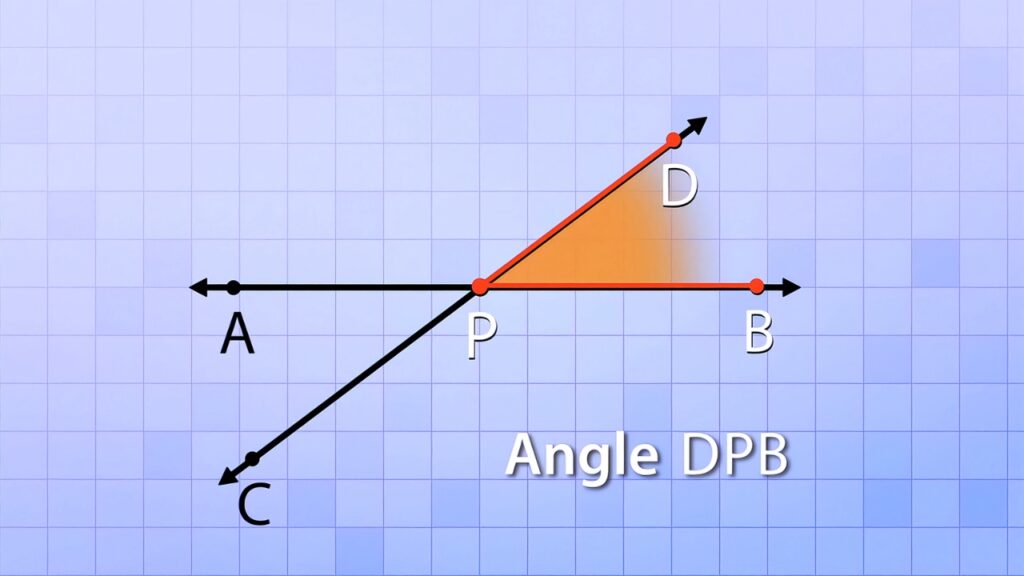
Geometry finals almost always start with angle relationships because they reveal whether students know the language of the subject.
Students should be solid on:
NAEP describes geometry as knowledge of shapes, symmetry, transformations, and relationships between figures. Common Core geometry starts with precise definitions of core geometric objects and the effect of transformations in the plane.
A student who sees a diagram and cannot identify corresponding or alternate interior angles is likely to lose points before the harder part of the problem even begins.
9. Triangle Congruence and Similarity
View this post on Instagram
Triangle work is one of the most exam-heavy geometry topics because it supports proofs, missing-length problems, and trigonometry.
Common Core geometry includes congruence through rigid motions and triangle criteria such as ASA, SAS, and SSS.
The National Mathematics Advisory Panel also singled out similar triangles as especially important because slope and linear functions depend on them in a logical way.
Students should know:
Example
If two triangles are similar and the scale factor from the smaller to the larger is 3, a side of length 4 on the smaller triangle becomes 12 on the larger one.
Sounds basic, but final exams often hide similarity inside diagrams with overlapping triangles, ladder problems, or indirect measurement setups.
10. The Pythagorean Theorem and Distance
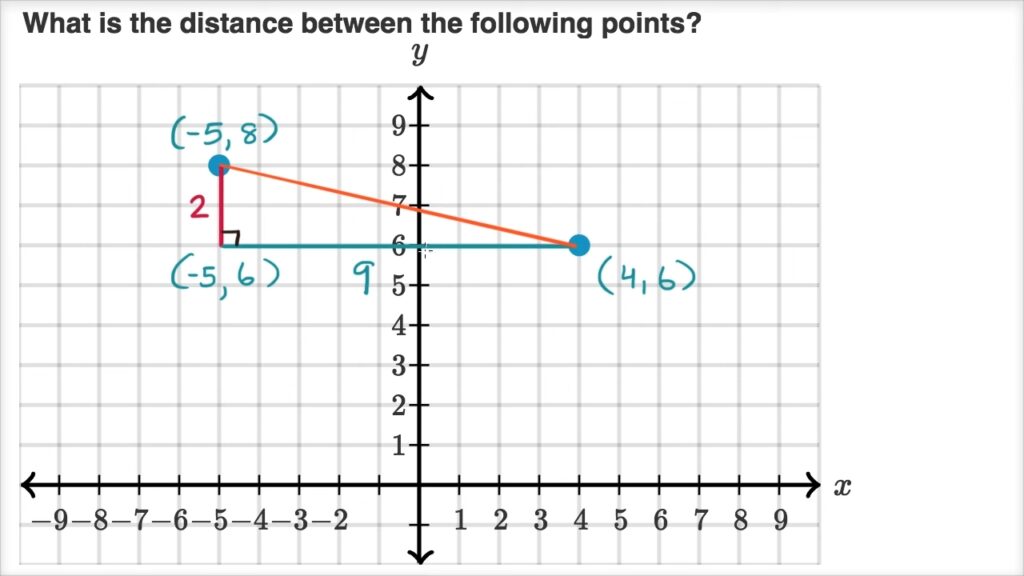
A few theorems appear more often on cumulative exams. Students should know the theorem, when it applies, and how it connects to coordinate geometry.
a² + b² = c²
Core uses include:
Example
For legs 6 and 8:
6² + 8² = c²
36 + 64 = c²
100 = c²
c = 10
Common Core geometry explicitly includes right triangle work and trigonometric ratios, while College Board also includes right triangles and related geometry content in its tested domains.
11. Coordinate Geometry
Coordinate geometry is where algebra and geometry fully meet. Students may need to prove a figure is a rectangle, find a midpoint, compute slope, or identify whether lines are perpendicular.
Common Core geometry includes expressing geometric properties with equations and using coordinates to prove geometric ideas algebraically.
Students should review:
Example
Find the midpoint of (2, 6) and (8, 10):
((2 + 8)/2, (6 + 10)/2) = (5, 8)
Teachers like coordinate geometry because it checks several skills at once. One question may require algebraic calculation, geometric vocabulary, and a written conclusion.
12. Area, Volume, Circles, and Right Triangle Trigonometry
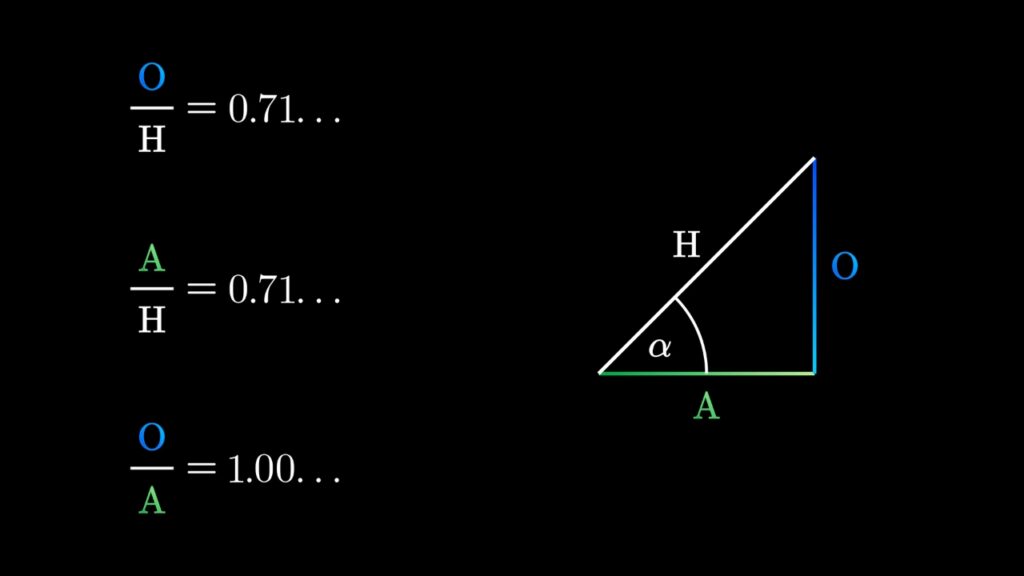
Measurement questions often feel straightforward until they become multi-step. Students may know the formula for the area of a circle, but still miss the problem because they forgot whether the given value was radius or diameter.
Common Core geometry includes circles, arc lengths, sector areas, volume formulas, and right triangle trigonometry. College Board similarly lists area, volume, circles, and right triangle trigonometry among the major tested content.
Students should know:
Example
If a right triangle has an angle of 30° and the hypotenuse is 10, then:
sin(30°) = opposite / 10
Since sin(30°) = 1/2, the opposite side is 5.
A final may attach a real setting to that same skill, such as a ladder against a wall or angle of elevation problem.
How Students Should Review During the Final Week
A strong study plan for geometry and algebra usually looks less dramatic than students expect. The best approach is often a cycle:
- Review one topic at a time.
- Solve a few basic problems.
- Move to mixed problems.
- Check errors and write down why they happened.
- Return to weak spots after a day.
The National Mathematics Advisory Panel argued that conceptual grasp and procedural fluency reinforce one another. In practical terms, that means students should not only memorize formulas.
They should also know what a slope means, why similar triangles produce equal ratios, and how a quadratic’s factored form reveals its zeros.
Common Mistakes That Cost Easy Points
A lot of final-exam damage comes from predictable errors:
Students who slow down for 10 extra seconds on setup often save far more time than they lose.
Summary

Final exams in geometry and algebra usually reward students who can connect ideas, not merely repeat steps.
Linear equations, systems, functions, factoring, quadratics, triangle relationships, coordinate geometry, measurement, and basic trigonometry make up a large share of what matters.
Around National Pi Day, many of these concepts come into sharper focus, especially when circle formulas and constants like π appear in problems.
A focused review of those 12 areas gives students a far better chance of walking into the exam ready for what shows up on the page.